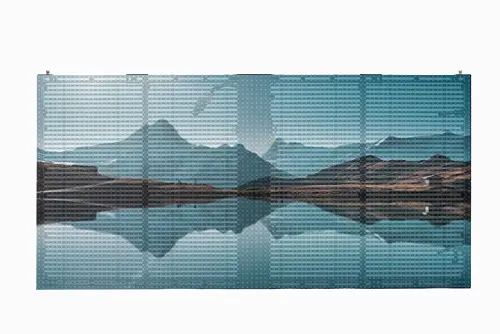
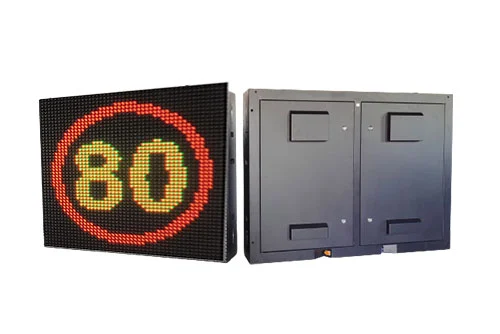
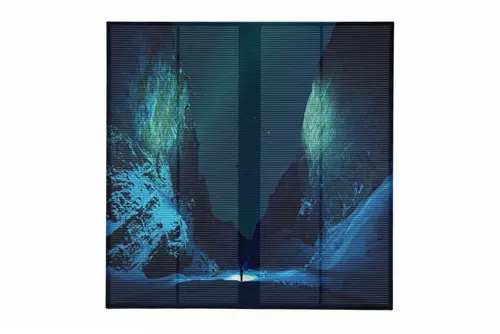
The global advertising and public communication landscape is evolving rapidly, and the outdoor LED display has become a foundational technology in this transformation. From large-scale digital billboards in New York City to infrastructure-driven installations in Dubai, LED displays are now embedded in both commercial and civic environments.
Unlike region-specific analyses, a global perspective reveals a more complex picture—one shaped by supply chain concentration, uneven regional demand, and fast-moving technological innovation. According to Statista, global digital out-of-home (DOOH) advertising revenue exceeded $20 billion in recent years, with continued expansion projected across both developed and emerging markets.
This article explores how the global outdoor LED display market is structured, where demand is growing fastest, and what trends are shaping its future.
The global outdoor LED display market is not uniform. It is defined by regional differences in economic development, infrastructure investment, and advertising maturity.
| Region | Market Characteristics | Growth Pattern |
| North America | Mature, high-value installations | Stable growth |
| Europe | Regulation-driven, quality-focused | Moderate growth |
| Asia-Pacific | Rapid urbanization, large-scale deployment | Fastest growth |
| Middle East | Landmark projects, government-led investments | High-value expansion |
| Latin America | Emerging demand, cost-sensitive buyers | Gradual growth |
| Africa | Early-stage adoption | Long-term potential |
Data from World Bank shows that urban population growth—particularly in Asia and Africa—is a major driver behind increased demand for digital infrastructure, including LED displays.
One of the defining characteristics of the outdoor LED display industry is its highly centralized supply chain.
| Stage | Description |
| LED Chip Production | Primarily concentrated in East Asia |
| Module Manufacturing | Large-scale production, mainly in China |
| System Integration | Regional companies customize and install systems |
| End-User Application | Advertising agencies, governments, and commercial operators |
China plays a particularly significant role as a global manufacturing hub. According to trade data referenced by United Nations, Asia accounts for the majority of global electronics exports, including LED components.
This structure allows international buyers to access scalable and flexible led screen solutions, especially when projects require customization or rapid deployment.
Markets such as the United States and Canada focus on premium installations, including:
Large-format advertising screens
Stadium displays
High-resolution urban signage
Demand is driven by strong advertising budgets and advanced digital infrastructure.
Asia-Pacific is the fastest-growing region, fueled by urban expansion and infrastructure investment. Countries like India and China are rapidly increasing their adoption of digital signage.
The International Energy Agency highlights that urban energy and infrastructure investments are rising significantly in this region, indirectly supporting LED deployment.
The Middle East emphasizes high-impact, large-scale displays, often used in iconic architectural projects. Cities like Riyadh are investing heavily in smart city initiatives and digital infrastructure.
These regions are still developing their digital advertising ecosystems. While budgets may be limited, demand is growing steadily as urbanization continues.
Technology is advancing quickly, reshaping both performance and application scenarios.
| Technology Trend | Impact on Market |
| Fine Pixel Pitch | Enables high-resolution displays in closer viewing distances |
| Energy Efficiency | Reduces operating costs and meets sustainability requirements |
| Smart Control Systems | Allows remote content management |
| 3D LED Displays | Enhances audience engagement |
Manufacturers are increasingly focusing on creative led solutions that combine visual performance with energy efficiency and adaptability.
Beyond hardware, new business models are expanding the value of outdoor LED displays.
| Model | Description |
| DOOH Networks | Centralized advertising platforms |
| Rental & Events | Temporary installations for concerts and exhibitions |
| Mobile Advertising | Use of mobile led trailers for flexible campaigns |
| Data-Driven Advertising | Programmatic and targeted content delivery |
The growing popularity of stage rental led display systems reflects increasing demand for short-term, high-impact visual solutions in events and entertainment.
At a global level, pricing is influenced more by project configuration than by standard benchmarks. Buyers typically evaluate the outdoor LED display panel price alongside installation, logistics, and lifecycle costs.
| Factor | Influence on Cost |
| Technical Specifications | Resolution, brightness, durability |
| Logistics | Shipping distance and import duties |
| Installation Complexity | Urban vs remote environments |
| After-Sales Support | Maintenance and system upgrades |
Search trends show continued interest in terms like led advertising board price, but in practice, most buyers rely on customized quotations rather than fixed price lists.
Despite strong growth, the industry faces several challenges:
Supply chain disruptions affecting component availability
Fluctuations in raw material costs
Trade regulations and tariffs
Need for localized technical support
According to the OECD, global trade uncertainties continue to impact manufacturing industries, including electronics.
The future of the outdoor LED display market will be shaped by several long-term trends:
Integration with AI and data analytics
Expansion of smart city ecosystems
Increased focus on sustainability
Growth of immersive and interactive displays
As global demand continues to evolve, companies that can combine technology, flexibility, and service will remain competitive.
The global outdoor LED display market is defined by strong growth, regional diversity, and rapid innovation. While supply chains remain concentrated, demand is expanding worldwide, creating new opportunities for manufacturers and solution providers.
Urbanization, digital advertising growth, and smart city initiatives are the primary drivers.
Because of its large-scale manufacturing capabilities and established electronics industry.
Technical specifications, logistics, installation complexity, and after-sales service all play a role.
Yes, they are increasingly popular for events, roadshows, and temporary advertising campaigns.
It will focus on energy efficiency, smart integration, and immersive visual experiences.
Statista – https://www.statista.com/
World Bank – https://www.worldbank.org/
International Energy Agency – https://www.iea.org/
OECD – https://www.oecd.org/


 English
 日本語
日本語 français
 Deutsch
 Español
 italiano
 русский
 português
 العربية