Across Europe, the transformation of public advertising spaces is accelerating. Traditional billboards are steadily being replaced by dynamic, data-driven formats powered by the outdoor LED display. From busy commercial districts in London to transport hubs in Berlin, digital screens are becoming a core part of urban communication infrastructure.
This shift is closely tied to the rapid expansion of digital out-of-home (DOOH) advertising. According to Statista, DOOH revenue in Europe has seen consistent year-on-year growth, driven by advertisers seeking more flexible and measurable campaigns. At the same time, European governments are investing in smart city initiatives, further integrating LED displays into urban environments.
This article provides a practical, market-oriented analysis of the European outdoor LED display industry—covering demand drivers, pricing logic, regulatory factors, and sourcing strategies.
Europe remains one of the most mature and structured markets for digital signage. Compared with emerging regions, buyers in Europe tend to prioritize compliance, durability, and long-term performance over short-term cost savings.
| Category | Details |
| Leading Countries | UK, Germany, France, Italy, Spain |
| Core Applications | Advertising billboards, transport hubs, retail signage, stadiums |
| Buyer Priorities | Quality, compliance, energy efficiency, lifecycle cost |
| Technology Direction | Fine pitch LEDs, smart control systems, energy-saving solutions |
Cities such as Paris and Madrid are leading adopters, particularly in high-footfall commercial areas where digital visibility directly impacts advertising performance.
The growth of DOOH is one of the most significant drivers behind LED display adoption. The World Out of Home Organization reports that digital formats now account for a substantial share of total out-of-home advertising revenue, with continued expansion expected across Europe.
Unlike static billboards, digital LED displays allow advertisers to:
Update content in real time
Run multiple campaigns simultaneously
Optimize ads based on audience behavior
This flexibility significantly improves campaign efficiency and ROI.
The European Commission has been actively promoting smart city frameworks, encouraging the integration of digital communication systems in public infrastructure.
Outdoor LED displays are now commonly used for:
Public information systems
Traffic management updates
Emergency communication
Interactive urban media
Modern LED display systems can integrate with analytics platforms, enabling advertisers to track impressions and engagement. According to insights from Deloitte, data-driven advertising significantly enhances marketing performance compared to traditional formats.
Unlike standardized products, the cost of an LED display project varies significantly depending on technical specifications and local conditions. For most buyers, the outdoor LED display panel price is not a fixed number but a combination of multiple variables.
| Factor | Impact on Cost |
| Pixel Pitch | Higher resolution increases manufacturing complexity |
| Display Size | Larger structures require more materials and engineering support |
| Brightness & Protection | High brightness and waterproof ratings increase durability |
| Installation Conditions | Urban projects often involve higher labor and compliance costs |
| Certification | CE and RoHS standards are mandatory in Europe |
| Control Systems | Advanced software and remote management add value |
Instead of relying on general estimates, buyers typically request project-based quotations. This explains why search queries such as led advertising board price remain highly relevant—decision-makers are looking for tailored solutions rather than generic pricing.
Europe’s regulatory environment is one of the strictest globally, which directly affects outdoor LED display deployment.
| Regulation Area | Description |
| Advertising Permits | Required for most outdoor installations |
| Environmental Standards | Energy consumption and sustainability requirements |
| Light Pollution Control | Brightness limits in urban areas |
| Zoning Laws | Restrictions on display size and placement |
For example, cities like Amsterdam enforce strict guidelines on brightness and operating hours to reduce environmental impact.
The European market includes both local manufacturers and international suppliers, particularly from Asia.
| Aspect | European Suppliers | Global Suppliers (Asia) |
| Cost Structure | Higher | More competitive |
| Customization | Limited | Highly flexible |
| Lead Time | Longer | Faster production cycles |
| Technology | Established | Rapidly evolving |
As a result, many buyers are increasingly exploring creative led solutions that combine cost efficiency with customization capabilities.
Outdoor LED displays are no longer limited to fixed billboards. The market is diversifying into new application scenarios.
| Application Type | Description |
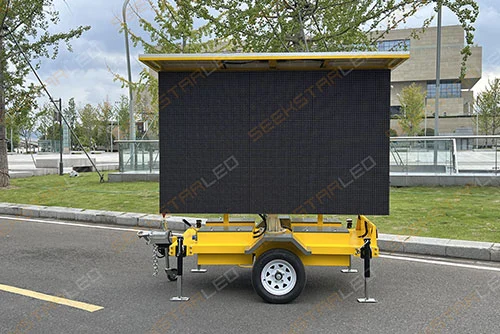
| Mobile Advertising | Growth of mobile led trailers for campaigns and roadshows |
| Event & Entertainment | Increasing use of stage rental led display systems |
| Retail Digital Signage | Interactive storefront displays |
| Transportation Hubs | Real-time information systems |
These applications highlight the growing demand for flexible and scalable led screen solutions that can adapt to different environments.
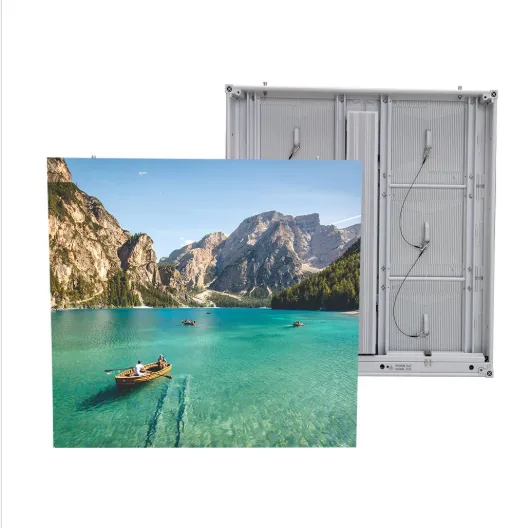
Higher-resolution displays are becoming more common in premium urban locations.
The EU’s environmental policies are pushing manufacturers toward lower power consumption technologies.
Cloud-based content management and IoT integration are improving operational efficiency.
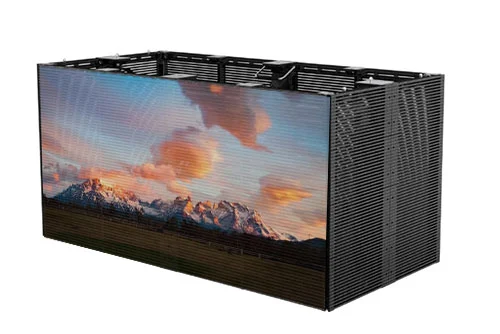
3D LED billboards and immersive content are creating new engagement opportunities.
The European outdoor LED display market continues to grow, driven by digital advertising demand, smart city development, and evolving technology. While regulatory complexity remains a barrier, suppliers that offer flexible, compliant, and high-quality solutions are well positioned to succeed.
It depends on pixel pitch, display size, installation complexity, and compliance requirements rather than a fixed market rate.
Because it offers better targeting, flexibility, and measurable performance compared to traditional advertising.
Yes, strict rules apply to brightness, placement, and environmental impact.
They are commonly used for events, temporary campaigns, and mobile advertising.
Yes, most projects require tailored solutions to meet local regulations and specific use cases.
Statista – https://www.statista.com/
European Commission – https://commission.europa.eu/
World Out of Home Organization – https://www.worldooh.org/
Deloitte – https://www2.deloitte.com/
Eurostat – https://ec.europa.eu/eurostat/


 English
 日本語
日本語 français
 Deutsch
 Español
 italiano
 русский
 português
 العربية