If your client requires a video display, would you suggest an LCD video wall or a direct-view LED display? This is a common question when planning a commercial display project. In this article, we will compare LCD and LED from multiple perspectives to help you decide which solution is better for your project.
Before starting the comparison, we should clarify one potentially misleading topic. In this article, “LED display” refers to a direct-view LED (DVLED) rather than an LCD screen with an LED backlight.
LCD stands for Liquid Crystal Display, a passive display technology. Liquid crystals do not produce light themselves. Instead, they control how much backlight passes through each pixel to form an image. Early LCDs used CCFLs as their light source. LED backlight gradually replaced CCFL technology because it enabled thinner designs, improved energy efficiency, and greater reliability. An LCD video wall is made up of several LCD panels joined together to make a bigger screen.
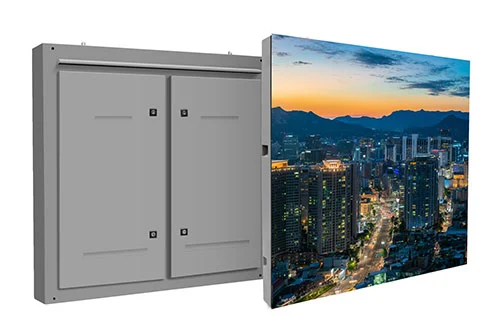
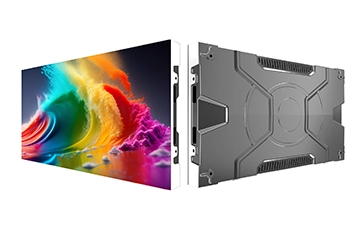
LED stands for Light-Emitting Diode. In a direct-view LED display, each pixel is made up of multiple LEDs, typically red, green, and blue. Unlike LCD panels, these LEDs generate light directly, so no backlight is required. By controlling the brightness of each LED, the display produces different colors and images.
Factor | LCD Video Wall | Direct-View LED |
Display structure | Multiple LCD panels | LED modules and cabinets |
Seamless display | Visible bezels | Seamless |
Screen size | Limited by panel dimensions | Highly scalable |
Brightness | Moderate to high | High to very high |
Viewing distance | Short to medium | Short to very long |
Resolution | Panel-dependent | Determined by pixel pitch and screen size |
Outdoor applications | Limited | Excellent |
Initial cost | Generally lower | Generally higher |
Maintenance | Panel-level replacement | Module/component-level maintenance |
Screen shape | Mostly standard rectangular panels | Flexible configurations available |
Large-format applications | Suitable with limitations | Highly suitable |
Long-distance viewing | Suitable | Excellent |
24/7 applications | Depends on model | Many solutions available |
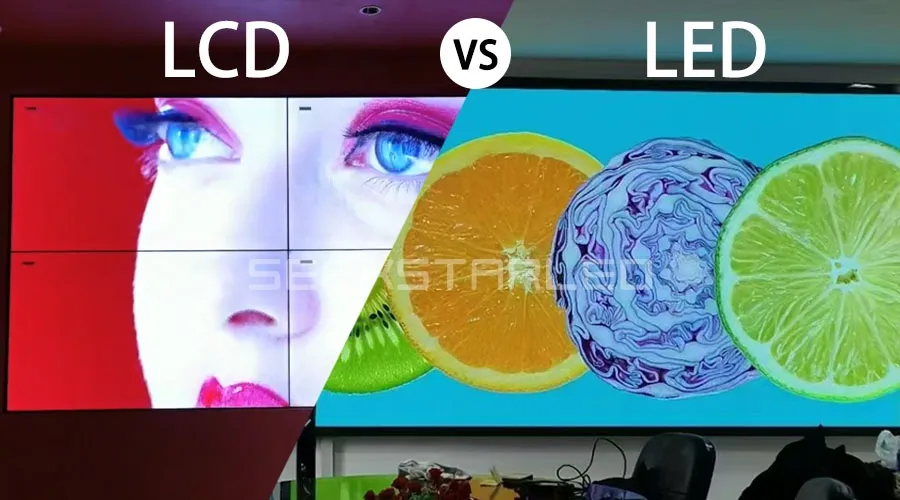
LCD video walls have visible seams between panels because of their physical bezels. When content spans multiple panels, the borders between adjacent screens can interrupt image continuity. Even if you use a seamless design, it is not really seamless in a physical sense. It’s a visually seamless design with special technology, which is quite expensive.
If you've ever observed an LED screen, you'll notice that it typically displays without black borders or image segmentation. This allows content to appear as one continuous image across the entire display. So if your project is in a highly interactive display environment such as a museum, LED can be a strong choice because its seamless, immersive image can create a more engaging viewing experience.
Screen size is another important factor when choosing between LCD and direct-view LED.
An LCD video wall is made up of standard-sized LCD panels. While you can increase the screen size by adding more panels, the final screen size and aspect ratio are still limited by the panel size.
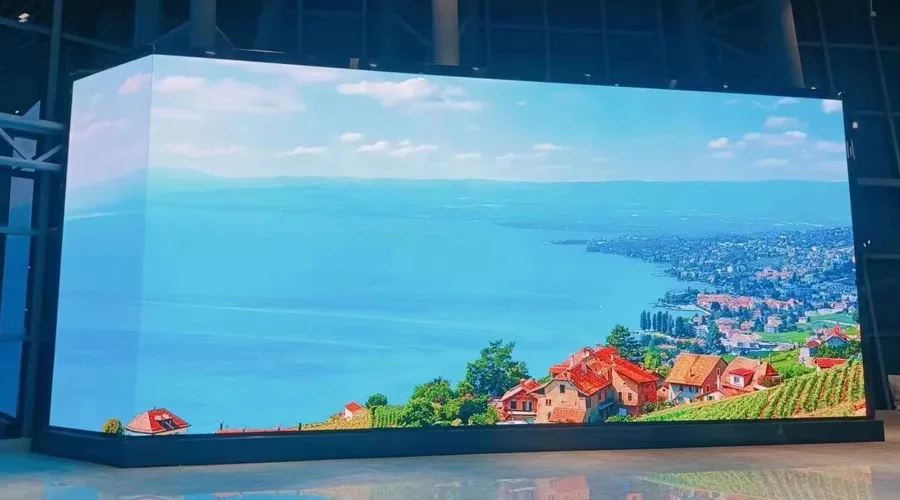
Direct-view LED displays use a modular design, giving them much greater flexibility in screen dimensions. LED displays can be built for screens ranging from a few square meters to very large installations covering hundreds or even thousands of square meters. Large 3D corner screens are a good example, as their size and custom geometry make direct-view LED particularly suitable.

The typical brightness of LCD video walls is 450-700 nits. Compared to ordinary home monitors (250-300 nits), LCD video walls are designed for higher brightness and longer-duty commercial applications. However, they are still not as bright as LEDs.
LED screens usually have a brightness of 800 to 10,000 nits (cd/m²). Many indoor LED displays operate in the range of 800–1,500 nits, while most outdoor screens are brighter than 5,000 nits. Some high-brightness models even exceed 10,000 nits.
Under direct sunlight, the display needs sufficient brightness to maintain image visibility. An LCD video wall is bright enough for common indoor scenarios. However, if your project is located in a well-lit indoor space, such as stadiums or spaces with large glass facades, direct-view LED may offer a better solution.
LCD video walls offer a significant resolution advantage, with a single screen capable of achieving a full HD resolution of 1920×1080. They can deliver sharp, detailed images even at relatively short viewing distances. They’re great for displaying PPT presentations, data dashboards, monitoring feeds, and other content that requires precise detail.
When viewed too closely, the pixel structure of an LED display can become visible, resulting in a less smooth appearance. At the same physical screen size, LCD can often provide a higher pixel density than direct-view LED, particularly when compared with larger-pitch LED solutions. As the viewing distance increases, the difference in pixel density becomes less noticeable. This is why pixel pitch and viewing distance are often more important considerations for LED than simply comparing native resolution.

Waterproof design is not a common feature of LCD video walls. Direct exposure to rain and moisture can damage conventional indoor LCD equipment. While protective enclosures can be added, they increase system cost and installation complexity and require additional attention to thermal management.
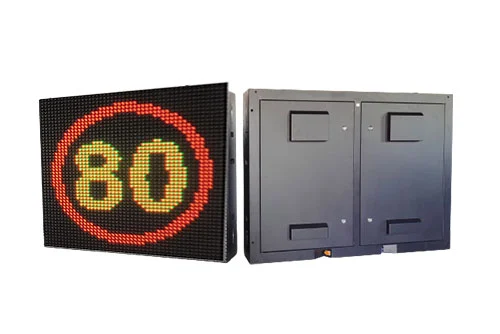
Outdoor LED displays are designed to withstand rain, dust, temperature variations, and direct sunlight. This makes them suitable for harsh outdoor settings. They also have brightness controls and can remain clearly visible in bright outdoor conditions.
If an individual LCD panel fails, you need to remove the entire panel for maintenance. The disassembly and reassembly process is complicated, and a slight mistake may damage adjacent screens, making the repair risky.
LED displays are usually serviced on a per-unit basis, such as individual LED modules, power supplies, and receiving cards. This modular design helps reduce equipment downtime for large projects.
The nominal lifespan of LCDs is generally 50,000 to 60,000 hours. However, in real projects, this number can be lower, especially in places like control rooms that work 24/7. After 3 to 5 years, LCDs might suffer from considerable loss of brightness or uneven illumination. If the problem is not repairable, the complete panel needs to be replaced.
High-quality LEDs have a nominal life of 80,000 to 100,000 hours. LED display chips also lose their brightness over time. The brightness of individual chips will gradually diminish, and even dead pixels may occur. Unlike a complete LCD panel failure, individual LED failures are usually localized. Failed modules or components can often be replaced without replacing the entire display.
In many projects, the initial purchase cost of LCD video walls is typically lower than that of direct-display LEDs. But it's easy to come to the wrong conclusions when you only compare buying prices. It makes more sense to consider the Total Cost of Ownership (TCO) over the entire project lifecycle.
In terms of upfront unit cost, LCD video walls generally have an advantage. LCD panels are mature consumer-grade products with a large supply chain. Commercial LCD panels are generally available at relatively predictable prices. When several panels are joined together, the price is calculated by adding up the prices of each panel.
Most of the time, LED screens cost more per unit, especially for fine-pitch models. A P1.25 LED display contains approximately 640,000 pixels per square meter. This higher pixel density generally increases the cost per square meter because more LED packages and associated components are required.
As the required screen size increases, the number of LCD panels also increases, while the physical bezels become more noticeable. For very large seamless installations, the cost advantage of LCD may become less significant depending on the required configuration.
The installation of LCD video walls is relatively standardized. They are typically installed using wall-mounted or floor-standing mounting structures. This makes for a simple structure with only moderate requirements for wall load-bearing capacity. The bracket fees and installation labor are the major costs.
The installation cost of LED displays may be higher. Indoor front-maintenance LEDs can generally be mounted flush against a wall, requiring no space behind them. Outdoor LED installation requires a dedicated steel frame to support the screen and usually needs a cooling system.
LCD video walls use a continuously active backlight, so their power consumption is less dependent on whether the displayed content is dark or bright.
The power consumption of an LED display is closely proportional to the display content. If the screen is dark or black, the power consumption will be drastically reduced. This provides an opportunity to optimize energy consumption in certain applications.
LCD maintenance costs can become significant over the service life of a large video wall. For example, replacing a 55-inch LCD panel might be a significant portion of the initial purchase price and requires professional disassembly and reassembly. During this time, the entire screen will be shut down, impacting business.
LED maintenance is more predictable and manageable, as many parts are replaceable individually. The cost of one module, receiving card, and power supply is only a very minor part of the total cost of the screen. Individual component replacement can simplify maintenance and reduce service time.
Spare-parts inventory is another cost you need to consider. LCD panels are updated quickly, and spare parts for the same model may not be available after a few years. Also, the panels are huge and have a significant stocking cost. If you are buying an LED display, it is advisable to prepare 5%-10% spare parts. LED modules and other spare components are relatively compact, making them easier to store and manage.
If the procurement budget is limited, the usage period is relatively short, and the screen is a small indoor installation, LCD may be the more economical option. If you wish to keep using it for a long time, the maintenance cost advantage of LED will gradually offset its higher purchase and installation costs, and the total cost of ownership may be the same or even lower. Therefore, we recommend making TCO calculations based on the actual service life and the installation environment and making the right choice for your project.
There isn't a single screen that works for everyone. There are only better options for your scenario. The table below breaks down which technology fits which environment for your reference.
Application | Often Preferred | Key Decision Factor |
Small meeting room | LCD | Close viewing & cost |
Conference room | LCD / LED | Screen size and viewing distance |
Control room | LCD / Fine-pitch LED | Viewing distance & content |
Corporate lobby | LED | Seamless visual impact |
Retail store | LCD / LED | Screen size and viewing distance |
Shopping mall | LED | Size & brightness |
Stadium | LED | Viewing distance & brightness |
Outdoor advertising | LED | Brightness & weather protection |
Museum / Immersive space | LED | Seamless & flexible design |
Church | LCD / LED | Venue size and viewing distance |
Outdoor event | LED | Brightness and large-format capability |
Still don’t know which one to choose? You may start with the following questions.
Outdoor — LED is usually the preferred option.
Indoor — Continue to evaluate screen size, viewing distance, and budget.
Yes — LED is better, especially for conferences, broadcasting, and high-end retail scenarios.
No — LCD may be suitable.
Small or medium size — LCD might work.
Large or extra-large size — LED can be fine.
Very close — LCD or fine-pitch LED could work.
Medium to long distance — LED can be matched with different pixel pitches.
Yes — LEDs are generally more advantageous, especially in outdoor environments.
No — LCD is fine if the installation is indoors and the sunlight can be controlled.
Yes — LCD may offer a lower upfront cost for many indoor applications.
No — Consider LED if seamless design, scalability, brightness, or long-term operation is more important.
If your project prioritizes budget, moderate size, and controllable sunlight, then LCD is a mature, stable, and practical choice.
If your project's key features are a seamless large screen, high outdoor brightness, and long-term use, then the visual experience and flexibility offered by LEDs are well worth the extra budget you invest.
If you are still confused, write down the three most critical needs, such as size > brightness > budget. Then, remember these three keywords and go to the Q&A above to make your selection. We recommend visiting current installations or performing mock-up tests in a real-world scenario before making a final decision. The visual experience is significantly more persuasive than a parameter table.
Direct-view LED is increasingly being used as an alternative to LCD video walls in control rooms, command centers, exhibition spaces, and outdoor applications. With seamless splicing, flexible scalability, and modular maintenance, they are the better alternative for these scenarios with controllable long-term expenses. However, for viewing distances under 3 m and given budget constraints, LCD video walls remain the most practical choice.
LED displays can display 4K content. You’ll need a video processor to scale the 4K image up to the screen. But that doesn't mean the panel itself has a native resolution of 3840x2160. In most cases, LED displays are 4K input, not 4K output. It’s like watching a 4k film on a 1080p panel. The picture is watchable, and the content is complete, but the actual clarity is limited by the screen’s physical pixel count.
To achieve native 4K resolution, the LED display needs 3,840 × 2,160 physical pixels, or approximately 8.3 million pixels. The required screen width depends on the pixel pitch. For example, a P1.86 LED display would require approximately 7.14 m of width to provide 3,840 pixels horizontally.
The size of LED screens is practically unlimited since they are made from separate modules. They are equally flexible in shape, able to be curved, cylindrical, spherical, or other custom shapes, suitable for a range of creative settings. For example, wraparound LED panels in shopping mall atriums, spherical screens in exhibition halls, curved screens on building facades, and irregularly shaped rental screens on stages.
Yes, and this combined strategy is becoming more and more frequent. In many large-scale projects, it is not a matter of one or the other but a combination of both technologies according to the particular needs of the scenario. For example, the primary display area might employ small-pitch LEDs to produce a seamless large screen for main content, while the secondary display areas might use LCD panels for detailed information and data lists. This combination provides visual impact in the core area yet keeps total costs down.
Choosing between LCD and LED isn't about which technology is better. Both LED and LCD have their pros and cons and are used in different types of industries and applications.
We don’t recommend only LED or LCD. We start by understanding your installation site and your actual usage needs, and then we provide the right solution. If you are working on a project, please do not hesitate to contact us for precise solution options and itemized quotations.


 English
 日本語
日本語 français
 Deutsch
 Español
 italiano
 русский
 português
 العربية